
New Jersey Deed Records Search
New Jersey deed records document every transfer of real property across the state. County Clerks in all 21 counties maintain these land records for public access. You can search deed records online through county databases, visit a clerk's office in person, or submit a request under the Open Public Records Act. The New Jersey State Archives also holds early land records dating back to the 1650s. Whether you need a recent deed or a historic property transfer, several tools and offices can help you find what you need in New Jersey.
New Jersey Deed Records Quick Facts
Where to Find New Jersey Deed Records
County Clerks serve as the primary custodians of deed records in New Jersey. The Land Act of 1785 gave county clerks the duty of recording deeds, and that role has not changed. Each of the 21 counties keeps its own set of deed books and indexes. In Essex County and Hudson County, the Register of Deeds handles recording rather than the County Clerk. All other counties use the County Clerk's office. You can visit these offices in person during business hours to search deed records, request copies, and review recorded documents for any property in that county.
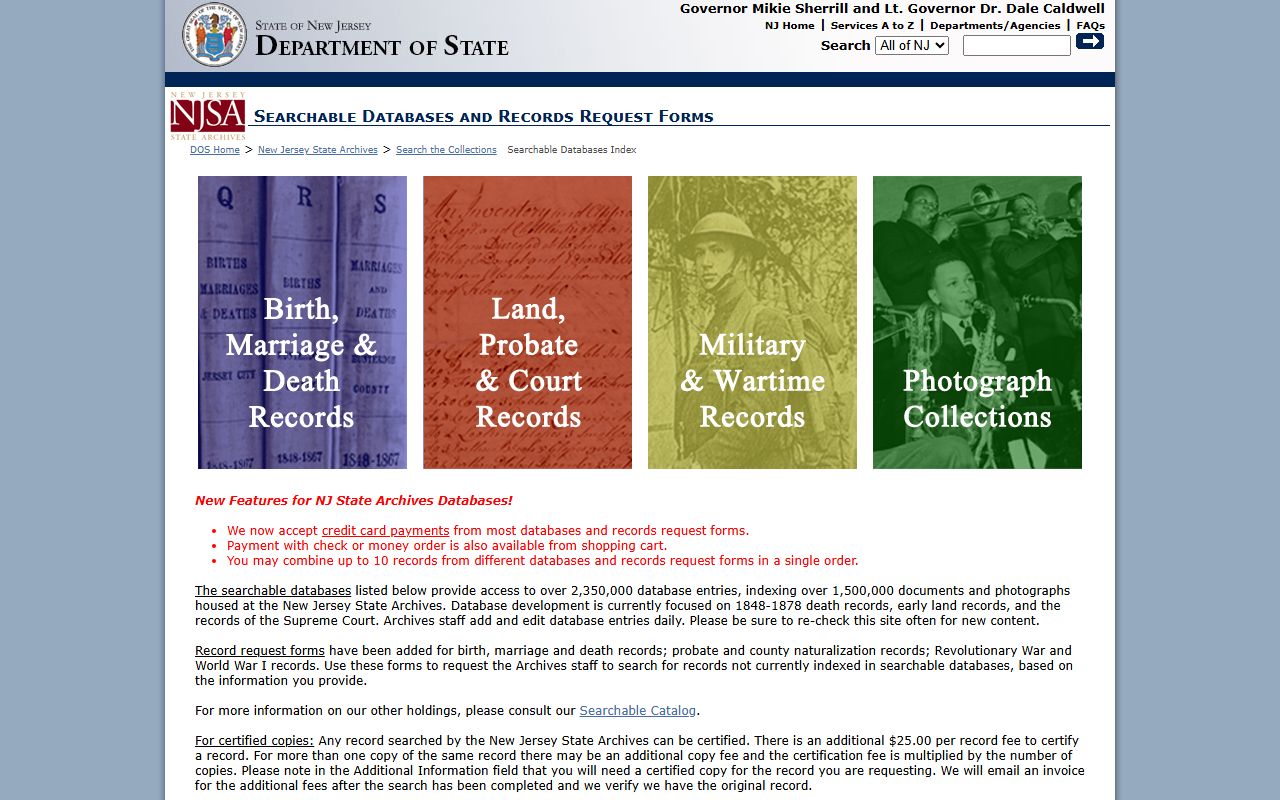
The New Jersey State Archives maintains searchable databases with over 2,350,000 entries indexing more than 1,500,000 documents.
The Early Land Records database alone contains over 75,210 land records with more than 385,583 name entries, covering deeds from the 1650s through the early 1900s in New Jersey.
Beyond the county offices, the Early Land Records search tool focuses on property documents from before the modern recording system took hold.
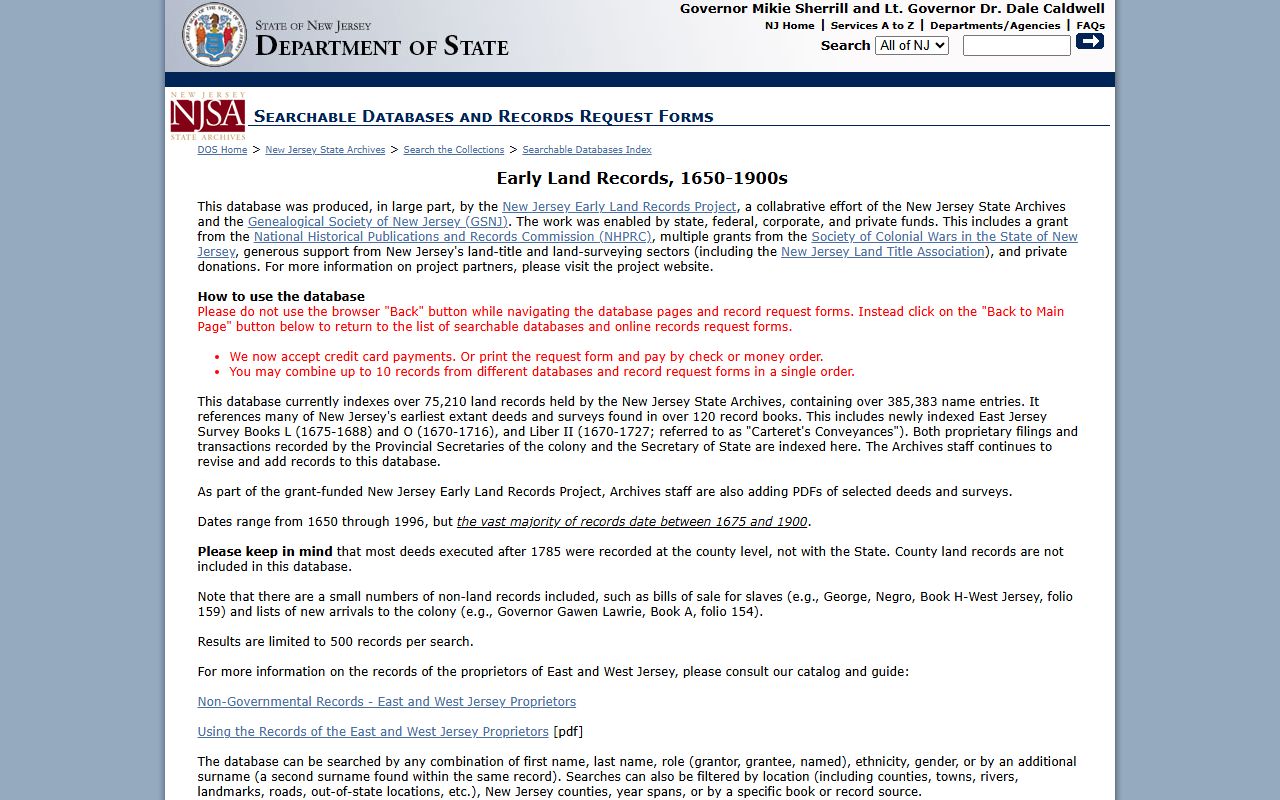
Most deeds created after 1785 were recorded at the county level, but older records from the colonial and proprietary periods often reside at the State Archives in Trenton.
How to Search Deed Records in New Jersey
Online access is the fastest way to search New Jersey deed records. Many counties now offer web-based search tools that let you look up recorded deeds by name, address, or instrument number. Some county systems go back decades while others cover only recent years. For older records, you may need to visit the County Clerk's office and search the grantor and grantee indexes by hand. These large books list every deed by the name of the person who sold the property and the person who bought it.
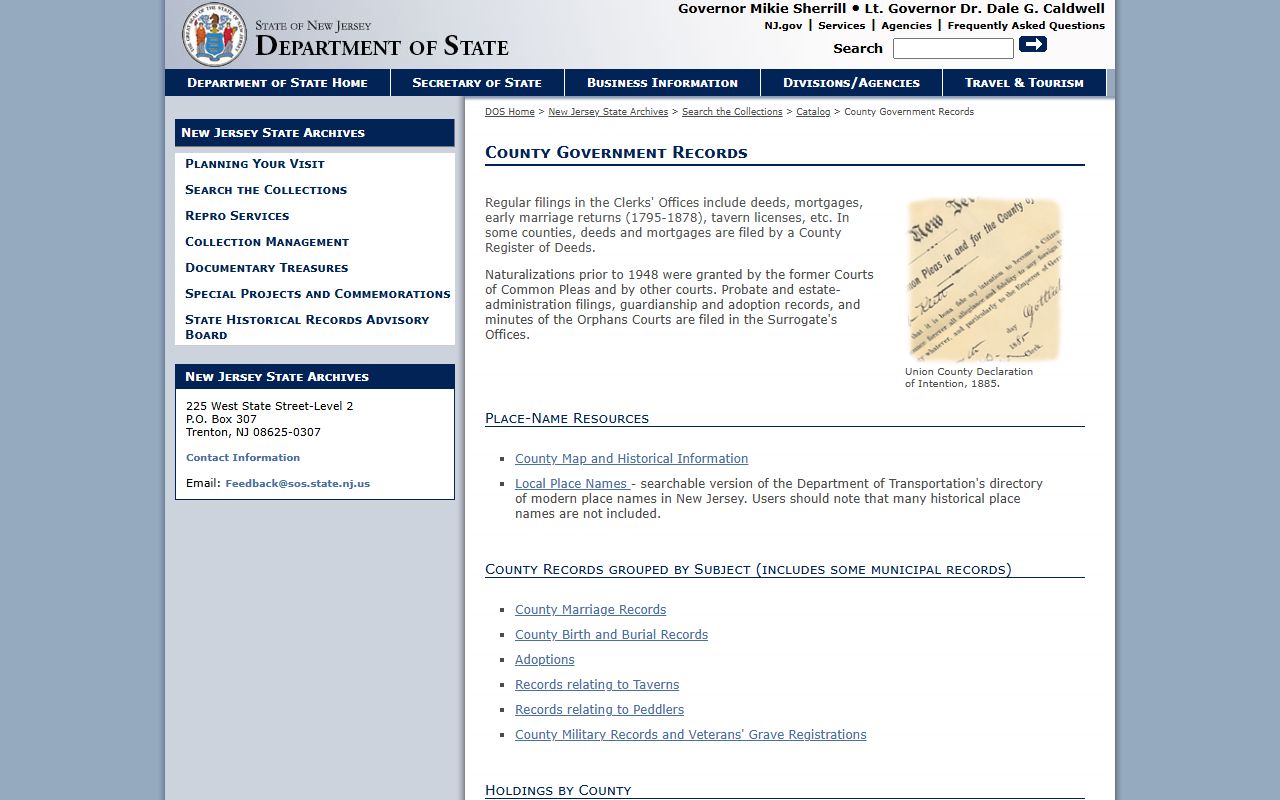
The State Archives catalog lists county government records held at the state level, which can be useful for deed records that have been transferred from local offices.
County clerks were required to file deeds starting in 1785, and mortgage recordings began in 1766 under New Jersey law. This means the state holds one of the longest continuous records of land transactions in the country.
You can also submit a request under the New Jersey Open Public Records Act, or OPRA, as set out in N.J.S.A. 47:1A-1. This law establishes that deed records are public documents. Any person can ask for copies. The Government Records Council oversees OPRA compliance across New Jersey, so if a clerk's office denies your request, you have the right to file a complaint. Most deed searches do not require an OPRA request since the records are freely available at the counter or online, but the law provides a backup when access proves difficult.
Types of Deed Records in New Jersey
New Jersey deed records include several types of instruments. Each type serves a different purpose and offers different levels of protection to the buyer. The most common deed in New Jersey is the warranty deed, sometimes called a full covenant and warranty deed. This deed guarantees that the seller holds clear title to the property and has the right to sell it. The seller also promises to defend the buyer against any future claims on the title. Warranty deeds provide the strongest protection for the buyer and are the standard for most home sales in New Jersey.
A quitclaim deed transfers whatever interest the seller may have in a property, but it makes no promises about the quality of that title. Per N.J.S.A. 46:5-5, quitclaim deeds must be recorded at the County Clerk's Office. These deeds are common in New Jersey for transfers between family members, adding or removing a spouse from a title, or clearing up a cloud on the title. Special warranty deeds fall in between. The seller only guarantees against claims that arose during the time they owned the property in New Jersey.
Other deed types found in New Jersey records include:
- Executor's deeds, used when an estate sells property after a death
- Sheriff's deeds, issued after a foreclosure sale in New Jersey
- Tax sale certificates, created when property sells for unpaid taxes
- Bargain and sale deeds, common in older New Jersey records
- Deeds of correction, filed to fix errors in a prior deed
The eForms deed resource provides details on recording requirements for quitclaim and other deed types across New Jersey.
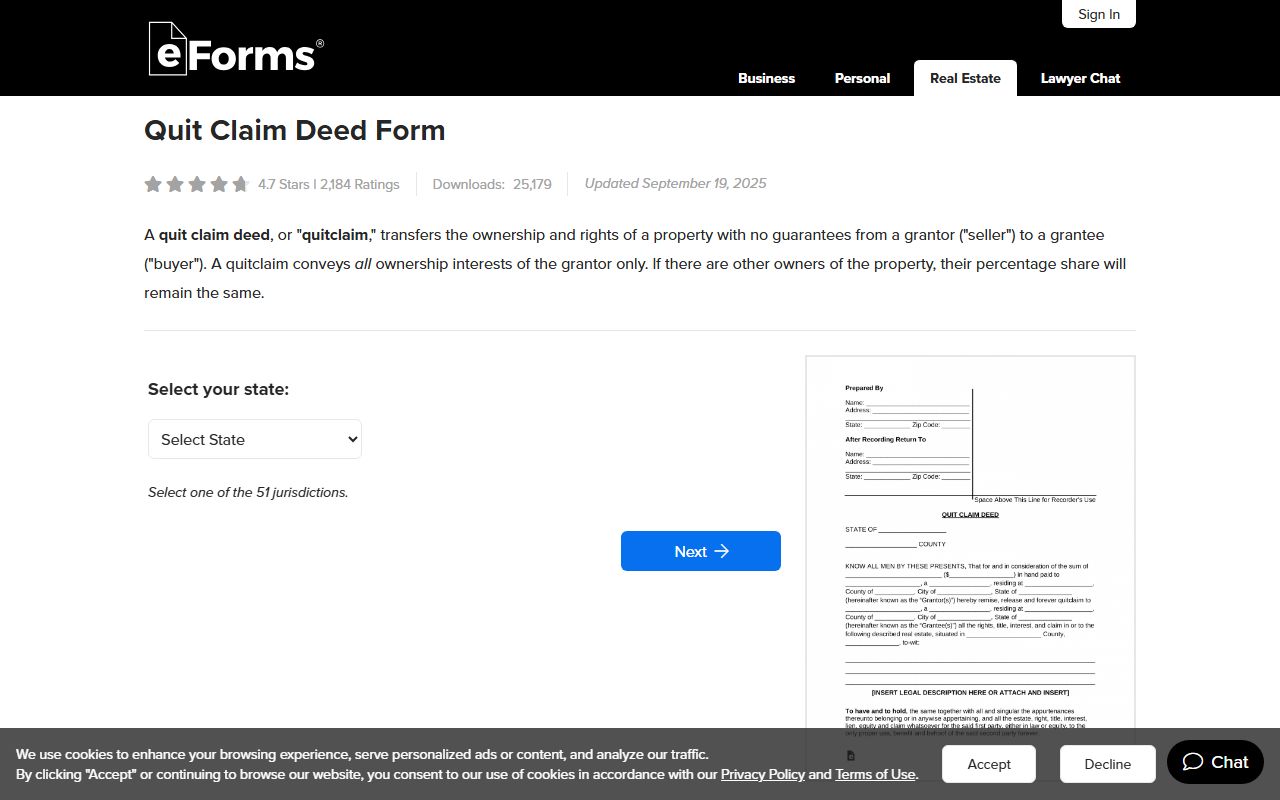
Recording fees and format requirements vary by county, though the state sets baseline rules under N.J.S.A. 46:26A-1 et seq.
Recording Deed Records in New Jersey
When a property changes hands in New Jersey, the new deed must be recorded with the County Clerk in the county where the land sits. Recording puts the public on notice that the transfer took place. Under N.J.S.A. 46:26A-1 et seq., the county clerk must accept documents that meet state formatting requirements. The deed must include the names of the grantor and grantee, a legal description of the property, the consideration paid, and the signatures of the parties. A notary must acknowledge the signatures before recording can occur in New Jersey.
Electronic recording has grown in New Jersey in recent years. The US Title Records guide explains how to find and obtain property records throughout the state.
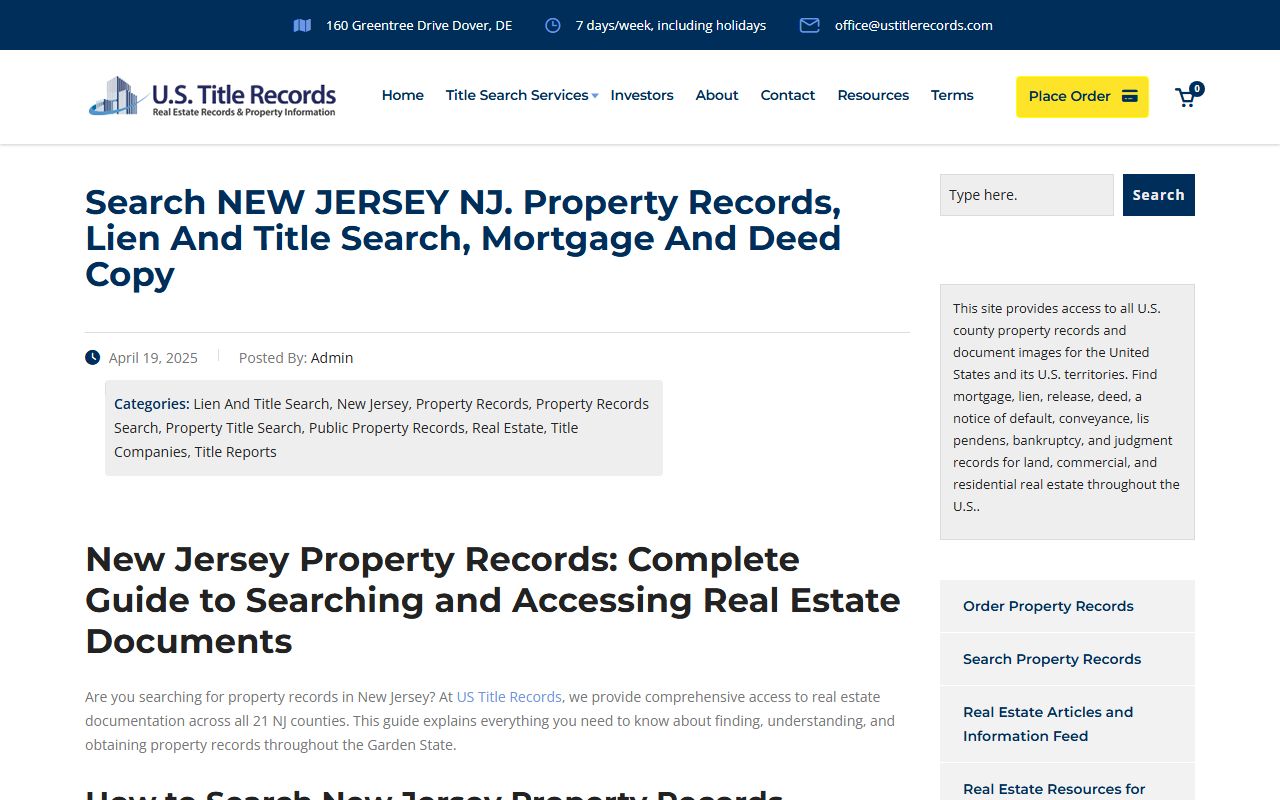
Many counties now accept deeds through electronic filing systems, which speeds up the recording process and makes new deed records available for search more quickly.
Once recorded, the deed receives a book and page number or an instrument number. The clerk indexes the deed under both the grantor's name and the grantee's name. This dual index system lets you search New Jersey deed records from either side of the transaction. Older deed books in New Jersey sometimes contain more than just deeds. Researchers have found powers of attorney, slave manumissions, wills, leases, and even maps bound into the same volumes. These extra documents can make deed books a rich source for property and family history research in the state.
Historical Land and Deed Records
New Jersey has some of the oldest property records in the United States. The earliest deed records date to the 1650s when Dutch and English colonists began buying land from the Lenape people. The colonial and proprietary periods created a complex web of land grants, patents, and surveys. The Garden State Legacy NJ Early Land Records Project is a collaboration between the Genealogical Society of New Jersey and the State Archives.
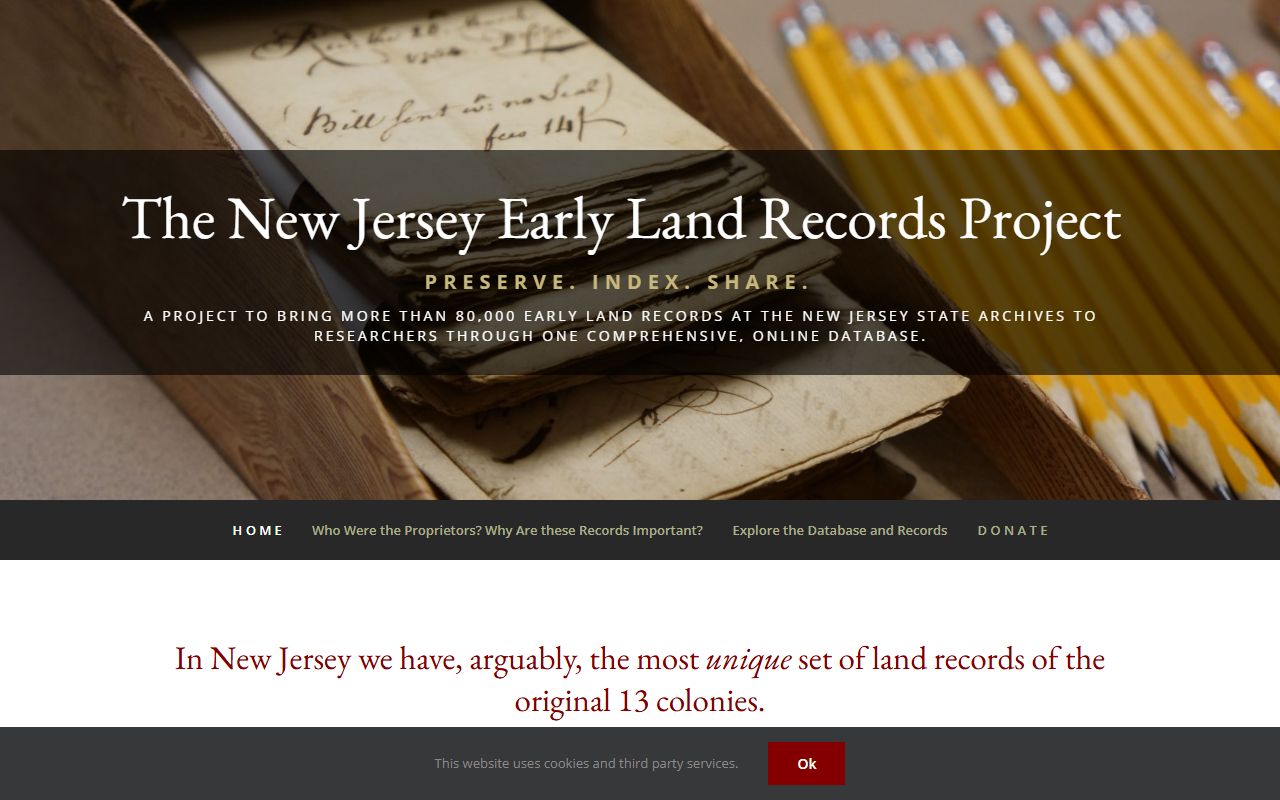
This project has indexed over 80,000 colonial and proprietary land records, making them far more accessible to researchers than they were in the past.
One challenge with older New Jersey deed records is that property owners often did not record their deeds right away. It was common to find deeds recorded years or even generations after the original transaction took place. A deed signed in 1750 might not appear in the county records until 1800 or later. This delay makes it important to search broadly when looking at early property transfers in New Jersey. The Rutgers Law Library research guide offers tips on navigating these older records.
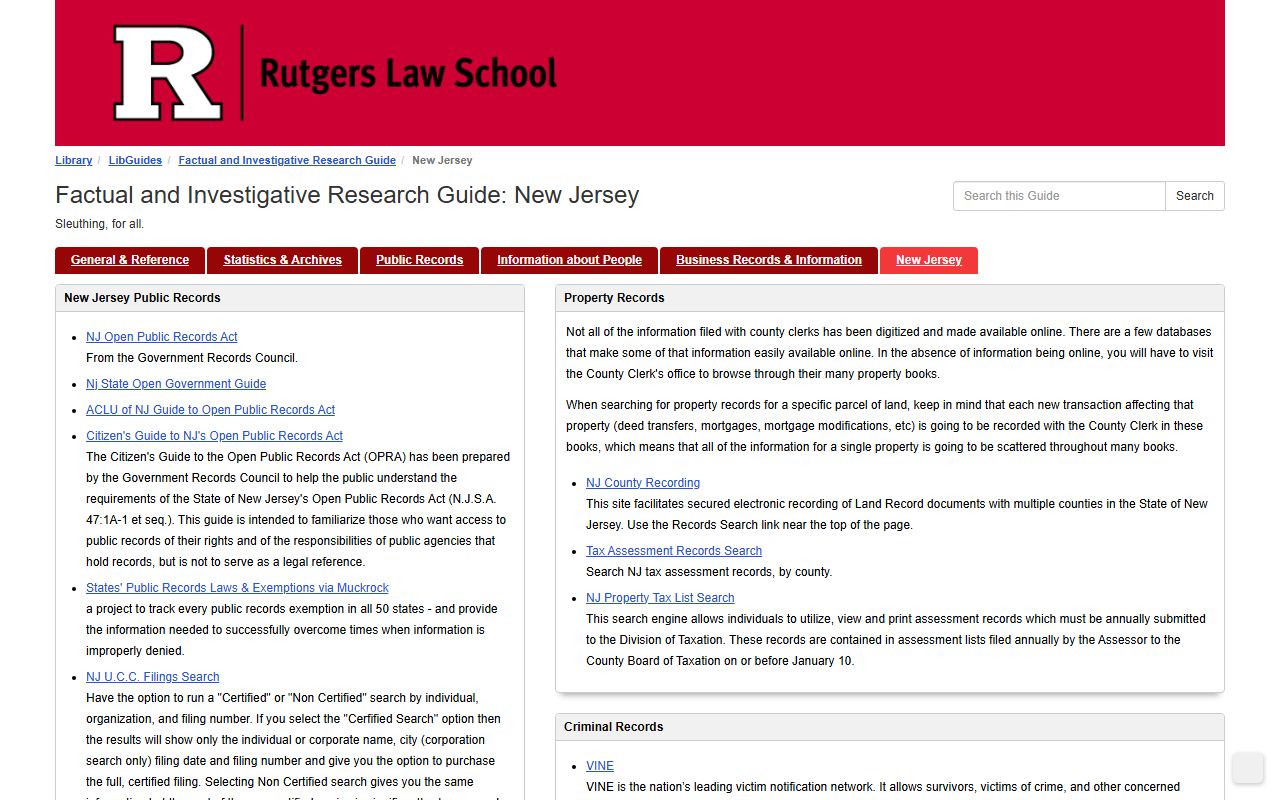
This guide walks users through the various archives, databases, and methods for finding property records across New Jersey, including microfilm collections at the FamilySearch Library that hold over 5,000 reels of New Jersey county land records.
The earliest mortgages in New Jersey date from 1724. Mortgage records sit alongside deed records in most county offices and provide another layer of information about property ownership. When you search deed records at a County Clerk's office, you can often search mortgage records at the same time using the same indexes.
Public Access to New Jersey Deed Records
Deed records are public documents in New Jersey. The Open Public Records Act, N.J.S.A. 47:1A-1, gives every person the right to access government records, and this includes deeds held by county clerks. You do not need to own the property or be a party to the transaction. Anyone can walk into a County Clerk's office, search the indexes, and request copies of any recorded deed in New Jersey.
The Government Records Council provides guidance on accessing public records, including property deeds, under OPRA.
If you run into trouble getting copies of deed records from a county office, the Council can help resolve access disputes.
Some information in deed records may be redacted for privacy. Social Security numbers and financial account numbers are typically removed from public copies. But the core details of every deed, such as the names of the parties, the legal description of the property, and the terms of the transfer, remain fully available. The New Jersey Judiciary also maintains judgment records that may affect property ownership, such as liens and lis pendens filings.
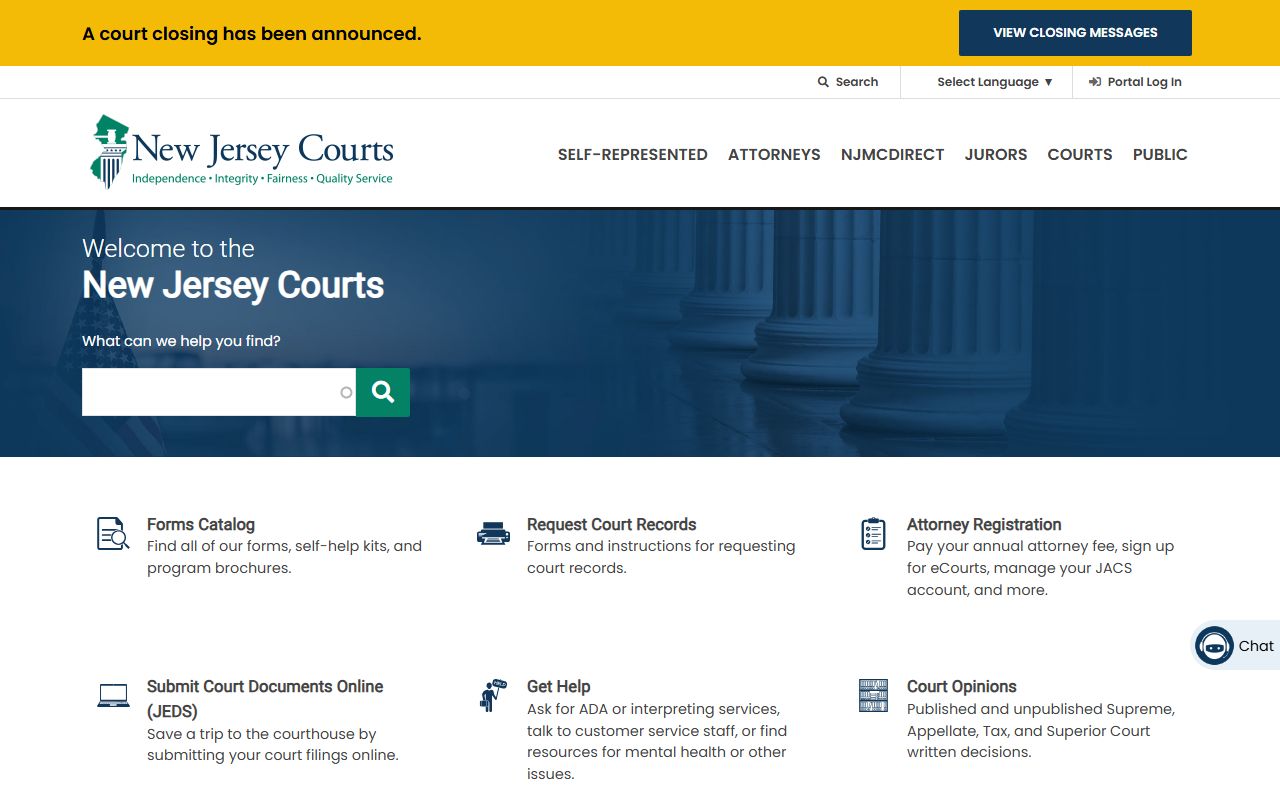
Checking court records alongside deed records in New Jersey gives you a more complete picture of any title issues or claims against a property.
How to Get Copies of Deed Records
There are three main ways to get copies of deed records in New Jersey. The first and most direct method is to visit the County Clerk's office in person. Bring the property address or the names of the parties involved in the transfer. Staff can help you search the indexes and pull the right deed book. Most offices charge a per-page fee for plain copies and a higher fee for certified copies. Certified copies carry the clerk's seal and are needed for legal proceedings or title work in New Jersey.
The second method is to search online. Many New Jersey counties have put their deed records indexes on the web. Some let you view and print deed images from home for a small fee or at no cost. Online systems work well for recent records, but coverage of older deeds varies by county. Bergen, Essex, and Middlesex counties all offer web-based deed search tools that cover several decades of records.
Third, you can submit a written request by mail or through OPRA. Mail your request to the County Clerk with the property details, the type of copy you need, and your payment. Include a self-addressed stamped envelope for the return. Response times vary across New Jersey, but most offices process mail requests within one to two weeks. For certified copies of New Jersey deed records, be sure to state that clearly in your request, as plain copies are the default.
Browse New Jersey Deed Records by County
Each county in New Jersey has its own County Clerk or Register of Deeds that keeps deed records. Pick a county below to find local contact info and resources for deed records in that area.
Deed Records in Major New Jersey Cities
Residents of major cities record their deeds at the County Clerk's office for their county. Pick a city below to learn about deed records in that area.