
New Brunswick Deed Records
New Brunswick deed records are on file at the Middlesex County Clerk's office, which sits right in the city. As the county seat, New Brunswick is home to the main recording office for all Middlesex County land records. You can search New Brunswick deed records online through the county's records system or visit the clerk in person at 75 Bayard St. This page covers where to find deed records, how to search them, and what resources are available for New Brunswick property research.
New Brunswick Deed Records Quick Facts
Deed Records at the Middlesex County Clerk
The Middlesex County Clerk at 75 Bayard St, New Brunswick records all deeds for the city and the rest of Middlesex County. Because New Brunswick is the county seat, the recording office is steps away from many of the city's neighborhoods. This makes in-person searches easy for local residents.
Every property sale in New Brunswick results in a new deed filed at this office. The deed shows the buyer, the seller, the price, and a legal description of the land. It also lists the block and lot from the city tax map. Staff at the clerk's office can help you find a deed by name, block and lot, or book and page. You do not need to hire anyone to search the records yourself. Walk in and ask at the front desk.
New Brunswick is also home to Rutgers University. The university's presence means a mix of residential, commercial, and institutional properties in the deed records. You will find deeds for student housing, downtown shops, and large parcels tied to the university. The city's role as both a county seat and a college town gives its deed records a unique range of property types.
Note: The Middlesex County Clerk's office does not charge a fee to search deed records in person.
Search New Brunswick Records Online
The Middlesex County online records search covers deeds from 1929 to the present. This includes all New Brunswick deed records filed in that time frame. You can search by party name, address, or book and page from any device with internet access.
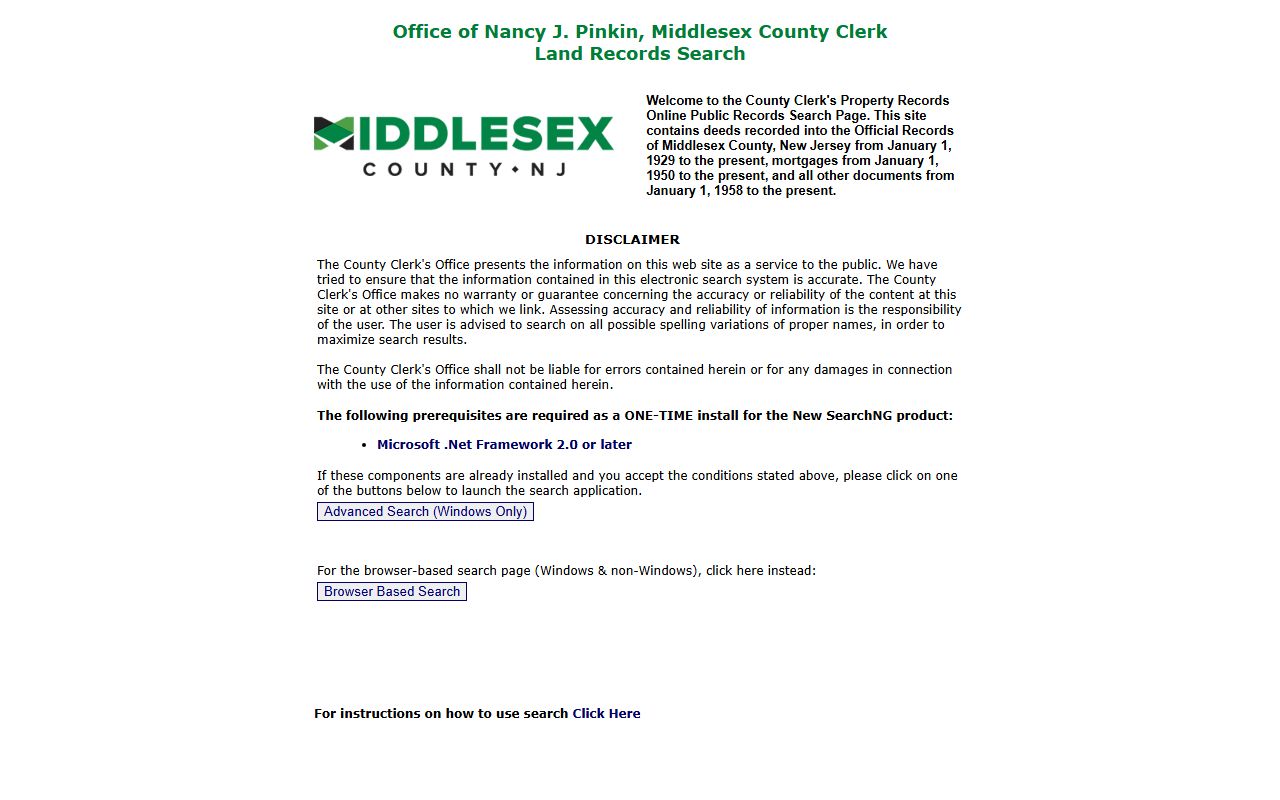
The online tool shows index data such as the names on the deed, the filing date, and the book and page number. It is free to use and available around the clock. For a full copy of the deed document, you may need to visit the clerk's office in person or submit a mail request. The online system is a good first step when you want to verify ownership or find the recording details for a New Brunswick property.
For deeds filed before 1929, you must visit the clerk's office and check the physical books. The older indexes are arranged by grantor and grantee name. Staff can guide you through these if you need help. Plan for extra time when searching records from the early 1900s or before.
Rutgers Law Library Property Guide
The Rutgers Law Library publishes a research guide for accessing property records in New Jersey. This guide is a helpful resource for anyone searching New Brunswick deed records. It explains how the recording system works, where to find records, and what legal terms mean.
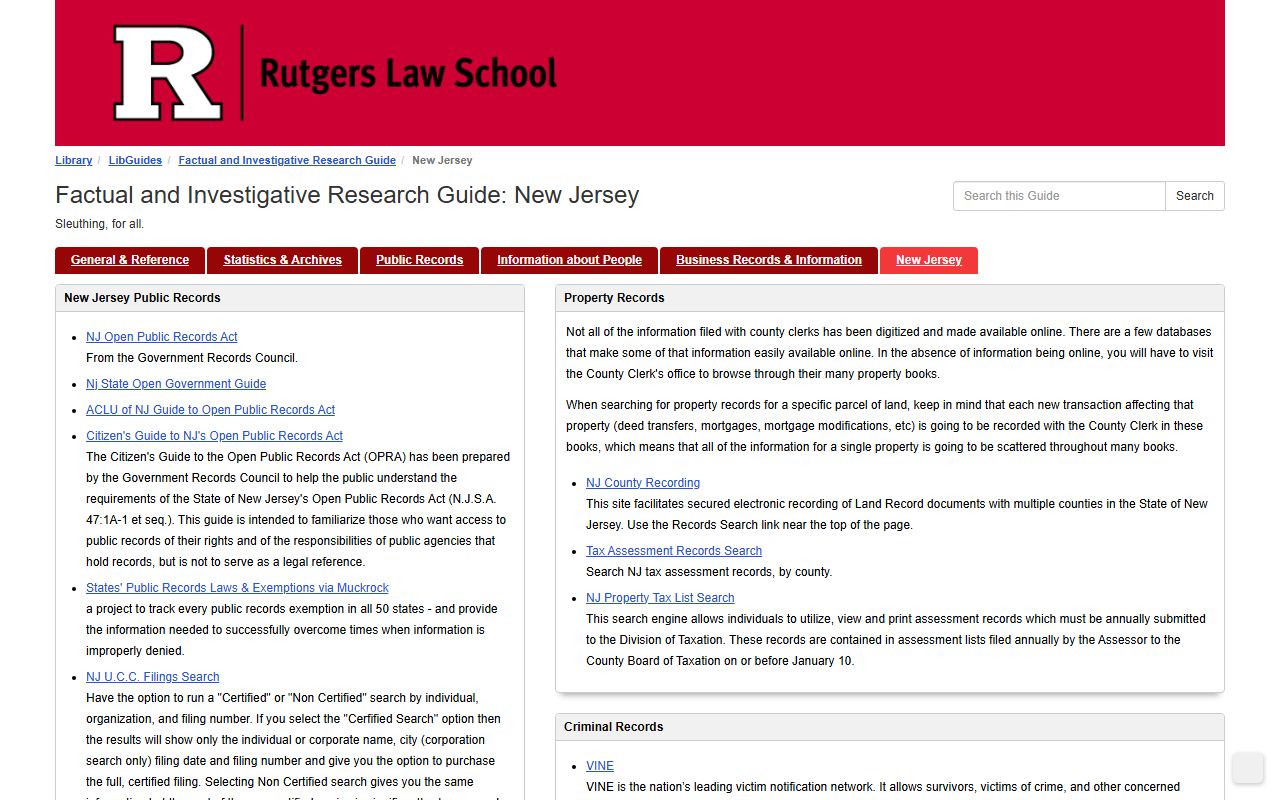
The guide covers topics like how to read a deed, what a chain of title looks like, and where to find historical land records. It is written for both legal professionals and the general public. If you are new to deed research in New Brunswick, this guide will save you time by explaining the basics before you start your search at the Middlesex County Clerk's office.
How New Brunswick Deed Records Work
A deed is a signed document that moves ownership of real property. In New Brunswick, every home or lot sale creates a new deed. The seller signs it in front of a notary. The buyer or their attorney then files it with the Middlesex County Clerk. Once it is recorded, the deed is a public record.
New Jersey law under N.J.S.A. 46:16-1 requires that deeds be recorded in the county where the land sits. For New Brunswick, that is Middlesex County. The recording act follows a race-notice rule under N.J.S.A. 46:22-1. The first buyer to record a deed in good faith wins in a dispute over the same property. This makes recording an essential step for every New Brunswick buyer.
Most deeds in the city use the bargain and sale form with covenants against the grantor's acts. This is the standard type across New Jersey. The seller promises they did not add any liens or claims during their time of ownership. Other types include quit claim deeds and full warranty deeds, each with a different level of buyer protection.
Historical Land Records for New Brunswick
The New Jersey State Archives holds older Middlesex County records that cover New Brunswick. The archives include deed books going back to 1784 and a collection of Ancient Deeds from 1877 to 1942. These are stored in Trenton and open to the public.
New Brunswick has been a center of commerce and education since the colonial era. Early deeds from the city describe lots along the Raritan River, commercial properties near the old market, and residential land in what is now the downtown core. Old deeds sometimes list the buyer's occupation, name a spouse, or describe the property by landmarks that no longer exist. These details are valuable for genealogists and local historians who want to trace the growth of New Brunswick over time.
Note: The State Archives hold records that the Middlesex County Clerk may no longer keep on site.
Title Searches in New Brunswick
A title search traces the chain of ownership for a property. In New Brunswick, this means reviewing deed records at the Middlesex County Clerk's office. A full search covers every deed, mortgage, lien, and judgment tied to the parcel. The goal is to confirm the seller has clear title.
Most buyers hire a title company. The company reviews the records, flags any problems, and issues a title insurance policy. You can also search on your own at the clerk's office. Start with the current owner name or block and lot number. Work backward through the deed index to trace each prior transfer.
Common issues in New Brunswick title searches include:
- Unpaid property tax liens
- Mortgage liens not yet discharged
- Easements or right-of-way grants
- Judgments against prior owners
- Errors in the legal description
If a problem comes up, the seller must resolve it before closing. The Open Public Records Act under N.J.S.A. 47:1A-1 ensures that all deed records in New Brunswick remain open to the public. Fees for certified copies are set by N.J.S.A. 22A:4-4 and are the same across all New Jersey counties.
Middlesex County Deed Records
New Brunswick is the county seat of Middlesex County, and all deed filings go through the Middlesex County Clerk. The county handles property records for many cities and townships across the region. For more on the county recording system, related records, and other resources, visit the Middlesex County deed records page.